I've been wondering this for a while. I want to live a sustainable and environmentally friendly lifestyle, but what if the things that I think are green actually aren't? What do all these different eco-labels mean? Are some products better than others, and are they the ones we expect?
There have been a couple of stories in the news recently which have caught my attention. For example, the Guardian published an article on the super food quinoa, suggesting that western consumption had increased its value so much that the Andean people who apparently relied on it could no longer afford it and were starving. Then came the response that eating meat was far worse, as the crops produced to feed cattle could feed 8.7 billion people per year - more than even exist, and a lot more than are currently going hungry. Finally, there was the suggestion that maybe quinoa's growers don't really want to eat it anymore. Now that it is increasing their wealth, they would rather buy foods they previously couldn't afford, like rice, pasta and noodles. So what should I do? Eat only quinoa and no meat? Or attempt to find a healthy balance?

I want to find the answers to questions like this. I figured other people might ponder the same questions too, so I will be reporting what I find here. I can't promise that I will ever find the 'right' answer, and I will certainly never try to tell anybody how to live their lives. But hopefully by asking questions and presenting information in response, I can make people think about the consumer choices they make, and together we can make the world a 'greener' place, whatever that means...
So the questions I am already considering:
There have been a couple of stories in the news recently which have caught my attention. For example, the Guardian published an article on the super food quinoa, suggesting that western consumption had increased its value so much that the Andean people who apparently relied on it could no longer afford it and were starving. Then came the response that eating meat was far worse, as the crops produced to feed cattle could feed 8.7 billion people per year - more than even exist, and a lot more than are currently going hungry. Finally, there was the suggestion that maybe quinoa's growers don't really want to eat it anymore. Now that it is increasing their wealth, they would rather buy foods they previously couldn't afford, like rice, pasta and noodles. So what should I do? Eat only quinoa and no meat? Or attempt to find a healthy balance?
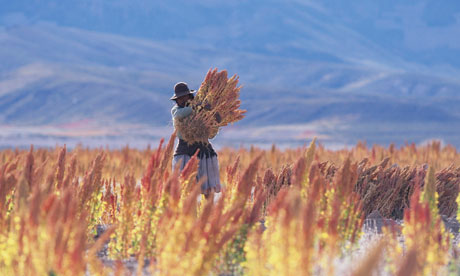
A woman carrying quinoa in Bolivia. Photograph: Laurent Giraudou/Corbis
I want to find the answers to questions like this. I figured other people might ponder the same questions too, so I will be reporting what I find here. I can't promise that I will ever find the 'right' answer, and I will certainly never try to tell anybody how to live their lives. But hopefully by asking questions and presenting information in response, I can make people think about the consumer choices they make, and together we can make the world a 'greener' place, whatever that means...
So the questions I am already considering:
- When I travel, should I try to compensate for my carbon emissions? Are some offsetting strategies better than others?
- What clothes should I buy? What is better for the environment, cotton or synthetics? Cotton production requires a lot of water and has been implicated in problems of human welfare, but synthetics support the petrochemicals industry, right?
- Is there such thing as sustainable palm oil? How do I know what products contain it if it exists?
- Should I use aluminium foil or cling film or a paper bag to carry my sandwiches in?
- Are any fisheries really sustainable? Should I support the 'better' fisheries, or stop eating fish altogether?
- How fair is fair trade?
- Where does the leather for my shoes and bags come from? How much carbon did those cows produce compared to the process of producing synthetic alternatives?
- Milk - Dairy? Soya? Almond? What is better for me, the environment, and the farmers??
- Is it better to buy exotic foods with air miles and support developing economies, or to buy locally produced goods?
I could go on... If anyone thinks they might have an answer to any of these questions already, I would love to know your thoughts. Similarly, if anyone else has a green dilemma they would like investigating, let me know!

No comments:
Post a Comment